 By
By Progressives aren’t going to be having all the fun in 2020. There will be centrists campaigning for the nomination just as hard.
The centrists are the candidates who will be explicitly running toward the middle. These are the ones making the loudest calls to win back working class, rural, white Obama-Trump voters.
There are probably more progressive voters in the Democratic electorate than there are centrist ones, but with fewer centrist candidates, whoever manages to lock down this chunk of the base could get an edge.
Governor Steve Bullock (MT): Bullock has twice managed to win statewide election in an otherwise deep red state, making him an appealing candidate for voters looking to cut into Trump territory. He’s a white man from the West with strong bipartisan credentials who may attempt a campaign to unify a divided country.
Former Mayor Michael Bloomberg (NY): Bloomberg has variously identified as a Republican, a Democrat, and an Independent across his career, giving everyone something to love – or hate. His hard-on-crime approach may play well with independent voters, though it’s certain to alienate criminal justice reformers (the left does not like Stop and Frisk). He poured millions into the 2018 midterms to support pro-gun control candidates, giving himself one strong liberal credential. With billions in wealth to back him up, Bloomberg could be a significant player.
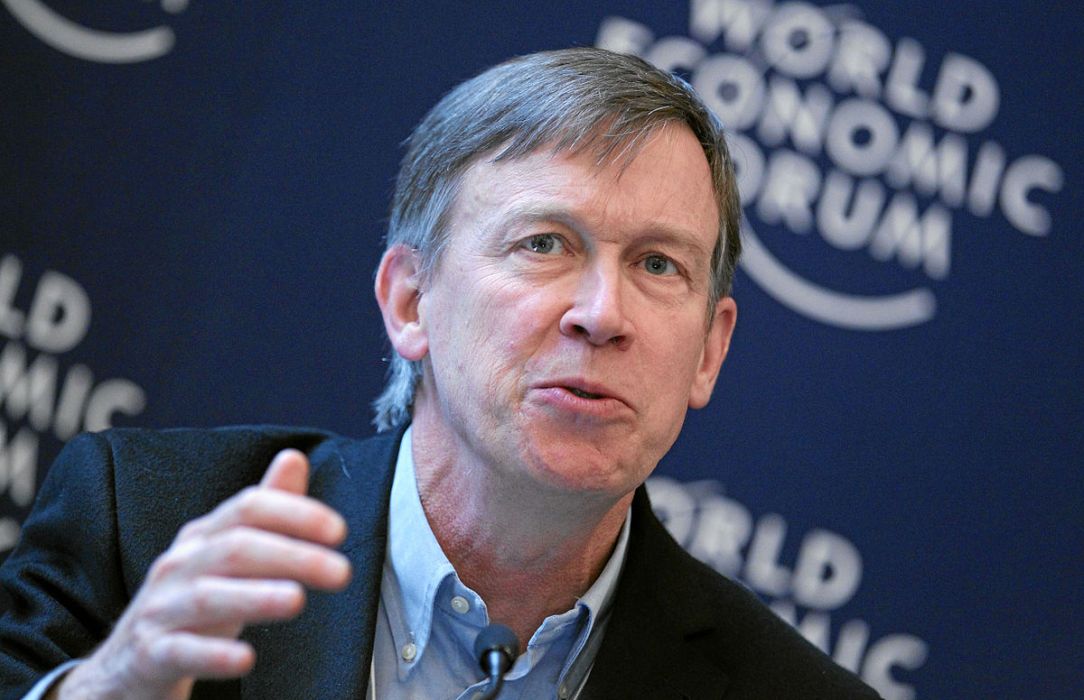
Governor John Hickenlooper (CO): The outgoing governor of Colorado (pictured above) has pegged his chances of running at “63, 64 percent” He holds several centrist positions, such as favoring fracking and opposing legal marijuana, but is also a staunch gun control advocate. There was briefly a rumor that Hickenlooper might join forces with Governor John Kasich (R-OH) in an independent Presidential run, and though that went nowhere, it is illustrative of Hickenlooper’s moderate credentials.
Former Governor Terry McAuliffe (VA): The former chairman of the National Governor’s Association and a prolific fundraiser with strong ties to Clintonworld, McAuliffe could come in with a well-funded, well-organized campaign. As governor of a swing state and chair of a bipartisan organization, McAuliffe has established a position near the political middle and has never strayed from the Clintonian concept of triangulation.
Richard Ojeda: Having lost his longshot bid for a Congressional seat in West Virginia, Ojeda is now one of just two openly declared candidates (Rep. John Delaney (D-MD) is the other). A military veteran, Ojeda voted for Trump in 2016 but has since turned against the President. He would hope to attract ancestral Democratic voters who drifted away from the party under Obama. But even running to the middle, the former state legislator may struggle to succeed in a party that despises the candidate he voted for in 2016.
Photo Credit: Connormah under Creative Commons

 Breakdown Politics