 By
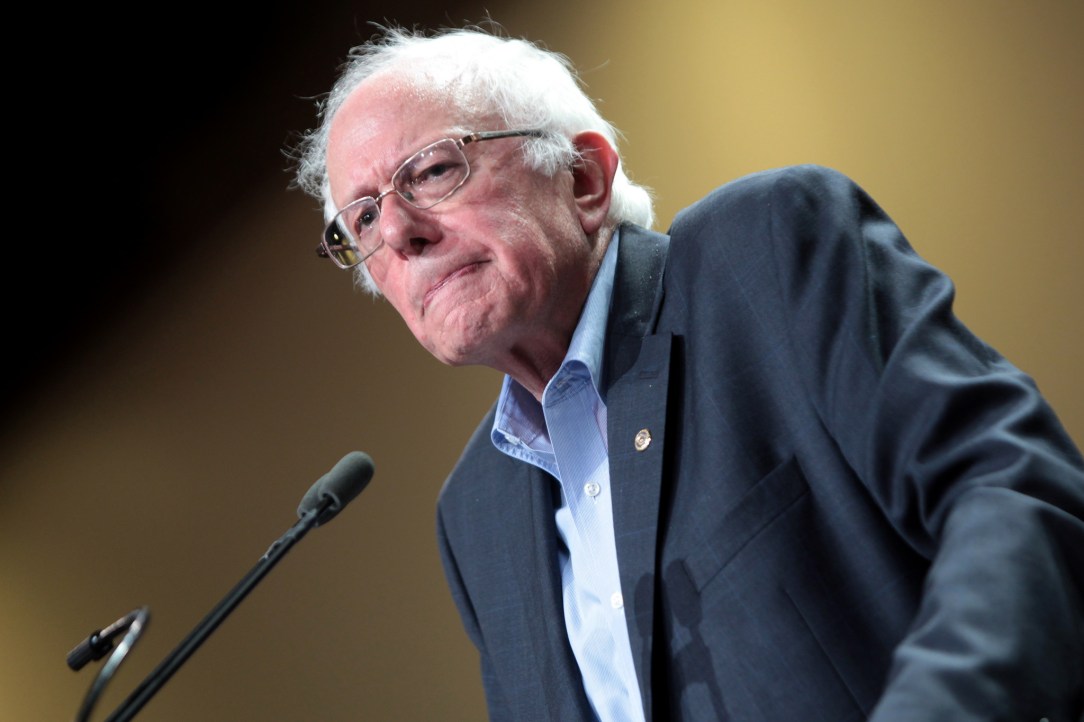
By Though he probably won’t win, Bernie Sanders has probably already blown up the 2020 Democratic Primary.
I’m not talking policy (though his 2016 campaign was instrumental in moving the party left).
I’m talking fundraising.
Bernie’s small-donor fundraising in 2016 absolutely shattered records. He raised $228 million in his Presidential bid. 58% of that (or $135 million) came from contributions of $200 or less.
For comparison, Hillary Clinton raised $564 million total (not counting Super PACS), only 19% of which ($106 million) came from small donation. Yes, Bernie raised less than half of what Hillary did across the entire cycle, but raised $30 million more from small donors than she did. And she kept campaigning and fundraising for five months after he stopped. That’s bonkers.
And it might well destroy the 2020 Democratic Presidential Primary.
Now that Bernie’s proven you can power a national campaign on small-dollar donations, that strategy is going to spread. Already in 2018, we saw Beto O’Rourke (D-TX) raise $70 million for his Senate race. 45% of that ($32 million) came from small donations. Other potential 2020 candidates like Elizabeth Warren (56%/$19 million from small contributions in 2018) also have small-dollar fundraising potential.
The problem (insofar as this is a problem) with small dollar fundraising is that it allows candidates to remain in the race way past the point of viability.
Presidential primaries typically follow a standard playbook:
-One candidate wins Iowa and/or New Hampshire
-Another candidate either narrowly wins one of the above or comes in a close second
-The rest of the field drops out
-The two leading candidates brawl in Nevada
-The two leading candidates positively wreck each other in South Carolina
-Whoever wins South Carolina goes on to sweep Super Tuesday and win the nomination.
-Donors to the second-place candidate stop donating, forcing the campaign to peter out after a few more weeks.
This pattern played out in the GOP in 2000, 2008, 2012, and 2016, and to a somewhat lesser degree in the Democratic Party in 2000 and 2004.
Small-dollar fundraising complicates matters. As long as a candidate can continue to tap a wide base of small-dollar donors, there’s no incentive to drop out, even if they get routed in South Carolina or on Super Tuesday. The 2016 campaign basically followed the standard playbook, except that Bernie didn’t have to drop out.
Bernie was basically doomed after South Carolina, but his fundraising only improved from that point forward.
A candidate probably can’t completely bomb the early states – O’Malley had to drop out after his pathetic showing in Iowa. But if there are three or four candidates with strong small-dollar donor bases, all of whom are within a few points of each other in the early states, it’s quite possible that they could all carry on to the end. Bernie’s proven you can get to the end even with no chance of winning, and maybe even build national influence while you do it. So why not try?
In other words, Bernie’s 2016 success makes it vastly less likely that the Democratic nomination will be decided by March of 2020. It may not be decided until the last primary in June – or perhaps not until the National Democratic Convention in July.
So, if you’re absolutely sick of the primary by March of 2020, go blame Bernie.

 Breakdown Politics