 By
By Yesterday, President Trump floated a proposal to end birthright citizenship via executive order, claiming that his lawyers had told him that such a policy was in his power.
Either the President is lying, or he has some terrible lawyers – or, more likely, both. This change is not going to happen – at least not soon.
Birthright citizenship is the principle that anyone born within the borders of the United States will automatically be considered a US citizen. This principle is enshrined in the 14th Amendment, which states, “All persons born or naturalized in the United States and subject to the jurisdiction thereof, are citizens of the United States and of the State wherein they reside.”
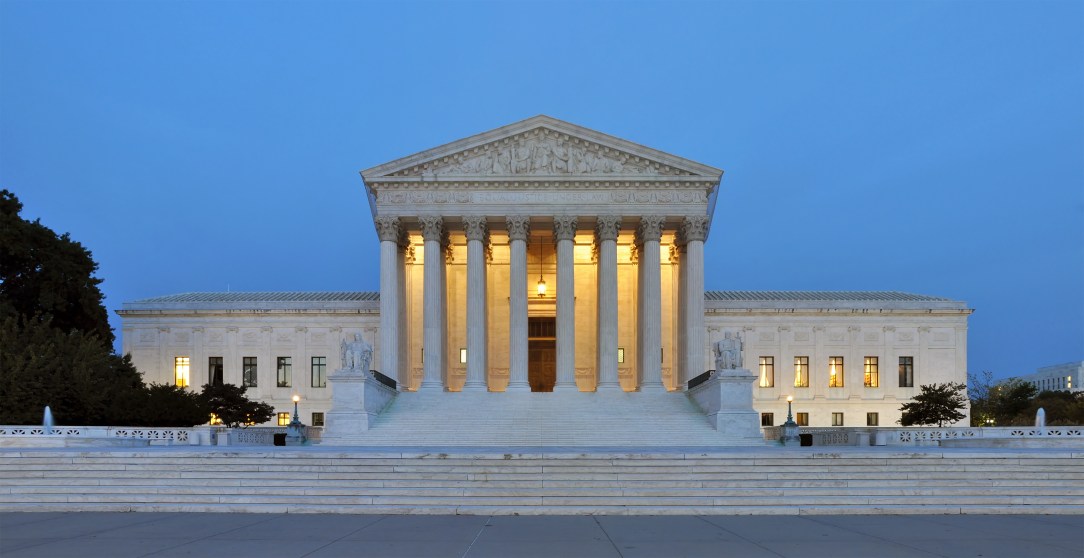
That’s pretty clear language. Further, the Supreme Court upheld birthright citizenship way back in 1898 in United States v. Wong Kim Ark.
The legal argument against birthright citizenship hinges on the “subject to the jurisdiction thereof” clause of the amendment, but it’s a fringe argument at best. If you’re curious, Vox has some excellent, more in-depth explainers.
That argument, weak as it is, is highly unlikely to overcome longstanding precedent and the clear text of the Constitution. So, Trump is almost certainly not going to be able to end birthright citizenship. If he issued an executive order to that effect, it would be swallowed up and frozen by the courts faster than you could blink.
What’s it matter then?
First, it matters because it’s Trump’s latest attempt to racism himself to victory in an election. Attacking and scapegoating immigrants has long been a go-to Trump strategy and it was almost certainly decisive in helping him win the 2016 GOP Presidential nomination. This is his latest attempt to gin up the GOP base and get it to turn out for the midterm elections next week.
The fact that he’s using racism as a conscious strategy should not mitigate the impact of that racism, for the record. Trump is clearly a die-hard racist and xenophobe. He probably genuinely thinks birthright citizenship is a bad thing. He’s just also aware that people agree with him on this and he believes him saying so could turn those people out. The modern Republican Party runs largely on the politics of cruelty, so it’s not an unreasonable bet.
Whether or not that will work is anyone’s guess. The GOP continues to lead in the Senate race and lag in House and Gubernatorial races. Democrats remain more excited to vote than Republicans. And with just a week till Election Day, it’s going to be basically impossible to determine the impact of Trump’s remarks here.
More important than Trump’s electoral machinations, I think, are the long-term implications of the President condemning birthright citizenship.
Major shifts in legal and political ideologies can take a long time. It requires new, zealous supporters of these changes to enter the picture and old actors who oppose these changes to either leave or change their minds. Legally speaking, it often takes years and waves of court cases to erode settled precedent, shift public opinion, and ultimately establish new principles. It took 12 years for marriage equality to travel from the fringes of liberal jurisprudence to becoming Supreme Court precedent – and that one moved fairly quickly.
So, Trump waging a war on birthright citizenship will probably not go anywhere in the next few years. But if his campaign inspires a generation of new Conservative politicians and lawyers to start developing a case against birthright citizenship?
We could be in for a very different conversation in 20 years’ time.
Photo Credit: Joe Ravi, CC-BY-SA 3.0

 Breakdown Politics